
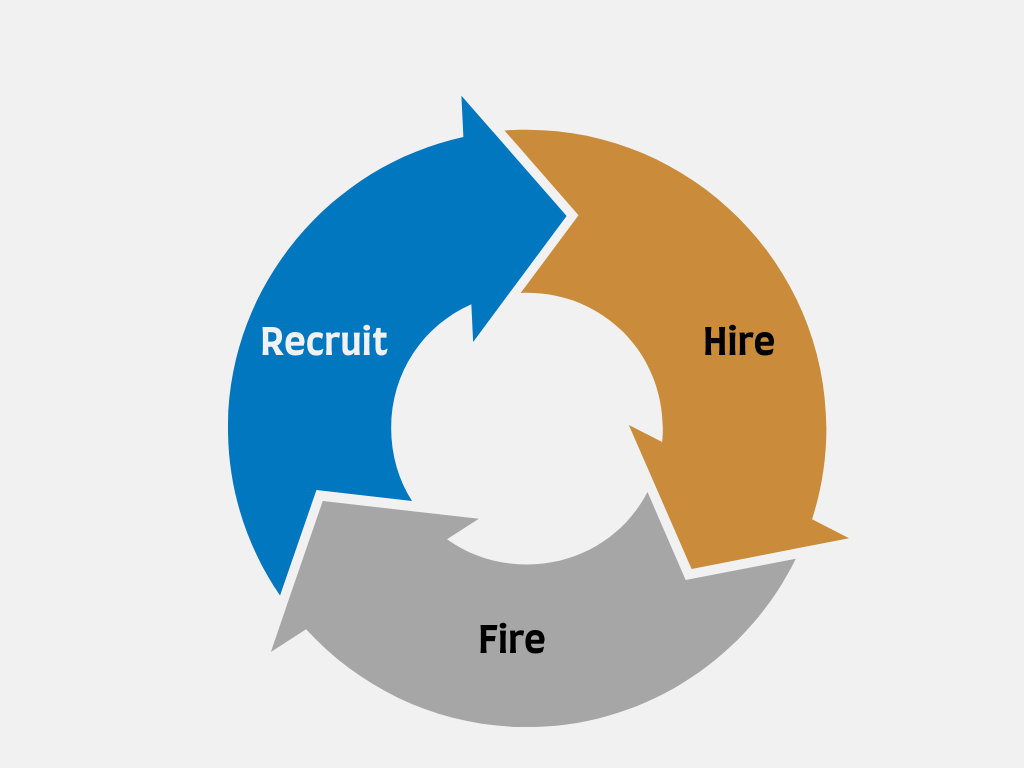
When I first started working with business owners, cash flow was the #1 issue keeping them up at night. Today, it’s staffing.
The never-ending circle of recruiting, hiring, and firing has become a new reality.
Regardless of the “why” (we could discuss that for hours), the biggest challenge facing businesses of all shapes and sizes is filling open positions with quality employees. That said, the problem isn’t simply a lack of exceptional job-seekers.
If you are constantly hiring people who don’t meet your expectations, you need to take a long, hard look at your organizational structure. It’s time to go back to basics and evaluate your staffing needs as if you were starting a brand-new business.
I like to call this process “returning to the wheel.”
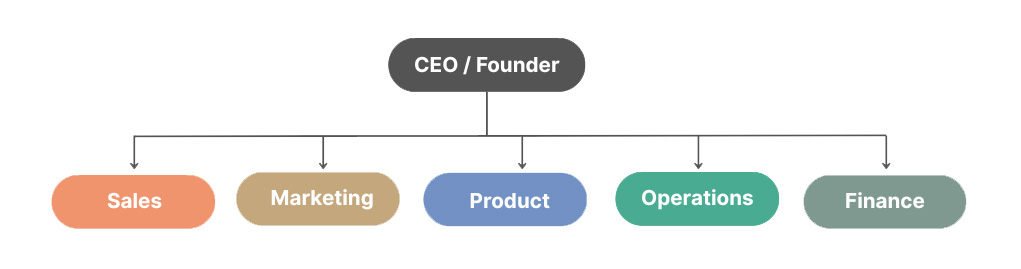
- Start with a blank page and create a functional organizational chart. The easiest way to begin is to list departments and/or titles. For example:
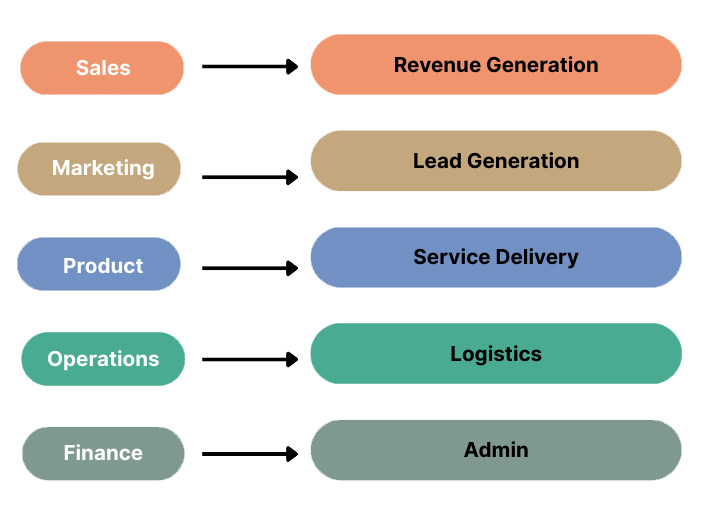
- Under each heading, add the relevant core tasks (what needs to be done/focused on.) Think in terms of functions, not people or titles. Ask yourself what is essential for your business to operate today. Examples could be:
- Now, define what success looks like for each function. For instance, success for “Handling Customer Complaints” might be “Resolve 90% of customer complaints satisfactorily on the first phone call”. This process will help you define the specific skills and abilities you need.
- Compare this ideal structure with your current team. Fill in the names of the employees who are truly a “fit” for the tasks required of their roles. This may not include every member of your staff.
- Take a step back and analyze the results.
- What roles exist (officially and unofficially)?
- Who delivers value – and who does not?
- Are you overstaffed in low-impact areas?
- Are you missing key functions entirely?
- Do you have gaps and overlaps?
Adjust your staffing strategy accordingly.
Business owners who approach this process with an open mind usually discover critical functions that are not being addressed (this is often due to a legacy structure.) In reviewing these essential jobs, you may have to face the hard fact that there are folks who no longer have a place in your organization. Or realize that you have been recruiting for the wrong skills and abilities.
Albert Einstein famously observed, “Insanity is doing the same thing over and over again and expecting different results.” You now have a roadmap for creating an entirely new staffing strategy – one that will empower you to build the right team for your business and break the cycle of “recruit, hire, and fire.”

