
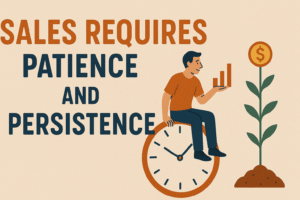
 You have a great product or service; someone needs that product or service; you reach out to them and share that you have the solution to their problem. This should be a slam dunk, right?
Not necessarily. Prospective customers are not always going to have an immediate need for what you’re selling. Chances are they have plenty of pressing issues to deal with, and you may not be the most important thing on their mind – at least, not at the moment.
Sales is a long game.
I have met brilliant salespeople in my career, and here’s what they have in common: they know that it can take months (or even years) to close a deal. And that practicing patience and persistence is the key to success.
Having patience gives prospects the time and space to make decisions without pressure. Persistence is the art of consistently following up to keep your brand top-of-mind. Finding the right balance – knowing when to wait and when to act – is critical for building trust and steadily moving prospects toward a decision.
Here’s how to weave both into your daily approach:
Patience in the Sales Process
Why it matters: Not every prospect will be ready to buy right away. I recently signed a new client who was referred to me by someone who heard me speak at a business conference years ago! Rushing the process can damage trust.
How to apply it:
- Listen more, talk less: Let prospects fully explain their needs before pitching solutions.
- Respect their timeline: After sending proposals or answering questions, give them space to review.
- Be consistent but calm: Follow up gently instead of pushing for quick decisions.
- Focus on the relationship, not just the sale: Aim to be a helpful resource even if they don’t buy immediately.
- Tip: Use your lead tracker’s “Last Contact Date” column to pace your follow-ups – not too soon, not too late.
Persistence in the Sales Process
Why it matters: Most sales require multiple touchpoints before a decision is made. Persistence keeps your solution top of mind, but the key is staying connected and relevant to prospects without coming across as pushy or annoying.
How to apply it:
- Plan regular follow-ups: Schedule them in your lead tracker (e.g. every 5–7 days).
- Offer new value with each touch: Share a case study, testimonial, or new insight each time you reach out.
- Stay visible and helpful: Keep checking in periodically, even if they’ve gone quiet.
- Never take silence personally: Many prospects are just busy, not disinterested.
- Tip:Track how many times you’ve contacted each lead in the notes. Often it takes 6–8 touches before closing.
Success in sales requires a long-term perspective. The art of balancing patience and persistence – knowing when to give prospects more time and when to reach out – is what separates average salespeople from exceptional ones. And ultimately, it will lead to happier, more loyal customers.

